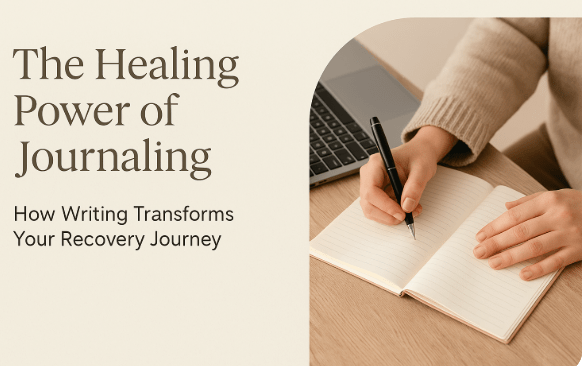
How Writing Transforms Your Recovery Journey.
n a world full of noise and constant demands, journaling offers something rare — a quiet space to untangle thoughts, process emotions, and reclaim your story. For those navigating the aftermath of trauma or seeking deeper self-understanding, the humble act of writing can be a profoundly transformative tool. Science now confirms what many have known intuitively: journaling isn’t just therapeutic, it rewires the brain, helps process unresolved experiences, and supports long-term healing.
Journaling as a Healing Practice

For centuries, people have turned to writing to make sense of life’s challenges. But it’s only in recent decades that research has caught up, showing that expressive writing can reduce stress, improve mood, and even boost immune function.
Psychologist James Pennebaker, a pioneer in expressive writing research, found that people who wrote about emotionally significant events for 15–20 minutes a day over four days experienced measurable improvements in both mental and physical health. This included reduced symptoms of depression and anxiety, lower blood pressure, and fewer doctor visits.
Understanding the purpose of Journaling
When it comes to trauma recovery, journaling allows you to:
- Externalise painful experiences rather than letting them cycle endlessly in your mind.
- Create structure and meaning from chaotic events.
- Release emotional charge by processing the experience safely on paper.
What Happens in the Brain When You Journal
Neurological studies reveal that journaling activates the brain’s left prefrontal cortex, the area responsible for logic, reasoning, and language. This activation helps regulate the amygdala, the brain’s emotional alarm system, reducing the intensity of fear, stress, and emotional reactivity.
Functional MRI scans have shown that labeling emotions in writing reduces activity in the brain’s threat-response systems — a form of emotional regulation that is especially powerful for those recovering from PTSD or anxiety disorders.

Dr. Jordan Peterson’s Findings: Writing, Reading, and Reframing.

Dr. Jordan Peterson, a clinical psychologist and researcher, developed a Self-Authoring program that helps individuals write about their past, present, and future. His studies show that when people write about past traumatic events, read their writing, and then edit it as if they were a third person, they gain powerful psychological distance.
This process:
- Shifts perspective from “I’m trapped in this memory” to “I’m an observer of this story.”
- Helps integrate memories into a coherent life narrative.
- Reduces emotional distress while increasing a sense of control.
In essence, by becoming both the author and the reader of your life story, you create new neural pathways that support resilience and personal growth.
The Healing Benefits, Backed by Research

Studies and clinical experience show that journaling can:
- Lower anxiety and depressive symptoms.
- Improve working memory and problem-solving skills.
- Enhance immune system function by reducing chronic stress.
- Improve sleep quality by reducing racing thoughts.
- Increase self-awareness and emotional intelligence.
How to Use Journaling in Your Healing Journey:
Here’s a simple trauma-informed approach:
- Create a safe space – Choose a quiet, private setting where you feel comfortable.
- Start with free writing – Let thoughts flow without editing or judging.
- Name emotions – Putting feelings into words helps reduce their intensity.
- Use third-person reframing – Occasionally write about yourself as “he/she/they” to gain perspective.
- Review and reflect – Read entries after a few days and notice shifts in tone, perspective, or insight.
- Balance with gratitude – Include moments of appreciation to reinforce resilience.
Journaling is more than self-expression — it’s a form of self-directed therapy, a neurological rewiring exercise, and a way to take ownership of your healing journey. Whether you’re processing deep trauma, navigating everyday stress, or striving for greater clarity, the act of writing can be a bridge from where you are to where you want to be.
At Sophic Wellness, we encourage journaling as part of our holistic healing approach, and is encouraged whilst engaging in Rapid NeuroCognitive technique with our Practitioner Ange, integrating mind, body, and spirit. By taking pen to paper, you’re not just recording life — you’re rewriting your future.
 Sophic Wellness
Leave a comment