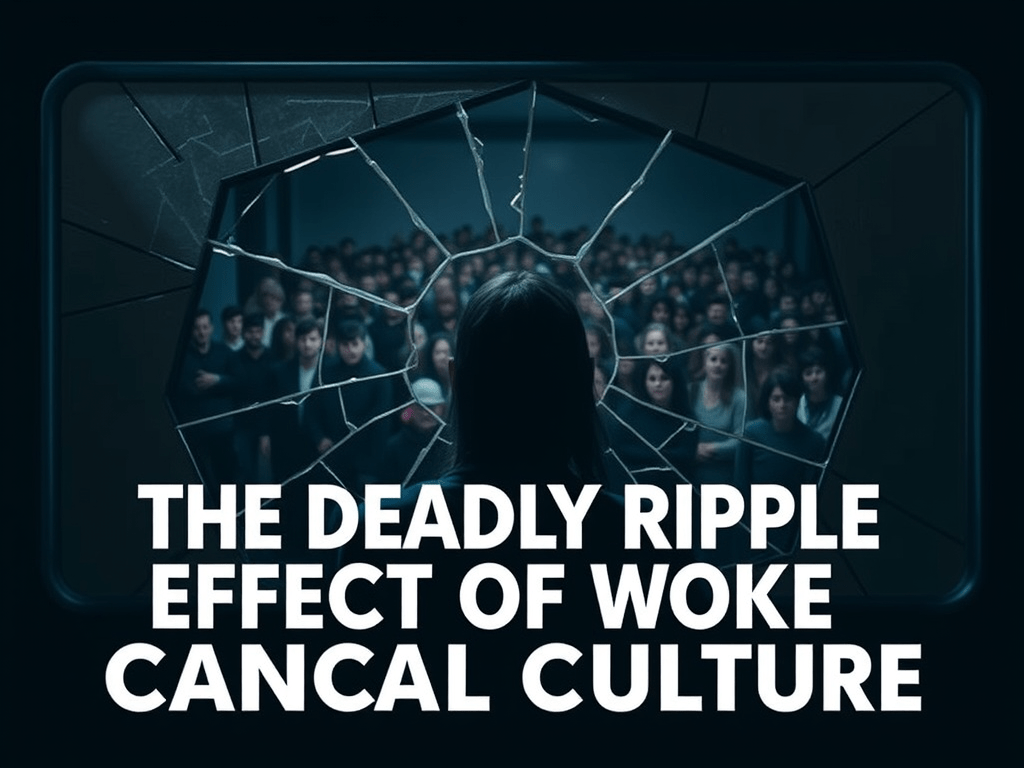
A Psychological and Sociocultural Analysis (Author: Ange Nilsson 08 02 2025)
Abstract
Cancel culture, a social phenomenon largely driven by the “woke” movement, has had devastating consequences not only for high-profile celebrities but also for ordinary individuals. What began as an effort to hold people accountable for their actions has evolved into an unforgiving, relentless form of social punishment that extends far beyond the original transgression. This paper explores the psychological and sociocultural impacts of cancel culture, its unique prevalence in Western societies, and the growing resistance against it. With the return of figures like Roseanne Barr, the resilience of Jordan Peterson, and the continued success of Tucker Carlson and Joe Rogan, there are signs that cancel culture is beginning to fade. Ultimately, we must ask ourselves: Is it time to stand up? Is the solution as simple as calling out the behavior of the so-called “woke folk”?
Introduction
Cancel culture is defined as a form of public shaming that seeks to ostracize individuals who express opinions deemed unacceptable by a vocal minority. While this movement was initially positioned as a means of promoting social justice and accountability, its rapid evolution into a tool for social destruction has left many questioning its true impact. From the personal devastation of the “average Joe” to the professional ruin of major public figures, the consequences are far-reaching and often irreversible. The objective of this paper is to explore how cancel culture affects mental health, career stability, and the overall psychological well-being of individuals, with a particular focus on Western culture’s unique obsession with this form of social justice.
Psychological Impacts on Individuals
For the average person, the fear of being “canceled” can lead to significant psychological distress. Those targeted by online mobs often experience:
- Severe anxiety and depression: The overwhelming public scrutiny can lead to deep emotional distress, triggering anxiety disorders and depressive episodes.
- Loss of career and financial instability: Many who are canceled find themselves unable to work due to reputational damage, leading to financial hardship.
- Social isolation: Friends and family often distance themselves from those who have been canceled out of fear of being associated with them.
- Loss of identity and self-worth: Individuals who are publicly condemned often struggle with self-doubt, questioning their intrinsic value and place in society.
A study by Stanford University found that public shaming, particularly through online platforms, can induce stress responses similar to those seen in individuals experiencing severe trauma. The inability to “move on” from an online scandal exacerbates the damage, as digital footprints are virtually permanent.
The Destruction of Celebrities and Public Figures
The entertainment industry and political arenas have witnessed some of the most extreme consequences of cancel culture. While some figures have been permanently ousted from their professions, others have managed to fight back and rebuild their careers.
The Downfall of Public Figures
- Roseanne Barr: Once a beloved comedic force, Barr was swiftly canceled for a controversial tweet. Despite her decades of contribution to the entertainment industry, she was immediately ousted without the opportunity for redemption. However, her return to public discourse signals a shift in cultural attitudes.
- J.K. Rowling: Despite her undeniable contributions to literature, Rowling’s critical views on gender identity led to her being ostracized by fans and colleagues alike.
- Gina Carano: The former “Mandalorian” actress was dropped by Disney over politically charged social media posts, demonstrating how corporations bow to cancel culture pressure to avoid backlash.
The Triumph Over Cancel Culture
- Jordan Peterson: The Canadian psychologist and professor refused to bow to pressure when he opposed compelled speech laws regarding gender pronouns. Despite efforts to discredit him, he has only gained influence.
- Tucker Carlson and Joe Rogan: Both figures have been the subject of intense media campaigns to discredit and de-platform them. Yet, through independent platforms and dedicated audiences, they have not only survived but thrived.
The Uniquely Western Phenomenon
Unlike other cultures that prioritize rehabilitation and nuanced discourse, cancel culture is almost exclusively a Western obsession. In Eastern societies, particularly in Japan and China, social faux pas are often met with a path of redemption rather than outright exile. The West, on the other hand, thrives on immediate, merciless condemnation.
This trend reveals a deeper issue: the Western world’s shift toward extreme ideological rigidity. The insistence on absolute moral purity has led to an environment where even minor missteps result in permanent ostracization. This contradicts the fundamental principles of free speech and open dialogue that Western democracies were built upon.
The Cultural Shift: Is Cancel Culture Fading?
Recent trends suggest that the grip of cancel culture is beginning to weaken. As more people recognize the hypocrisy and destructive nature of this movement, resistance is growing. The return of Roseanne Barr, the unwavering presence of Jordan Peterson, and the continued success of figures like Joe Rogan highlight a shift in public perception.
Key factors contributing to this shift include:
- Backlash against ideological extremism: Many are beginning to see the irony of a movement that preaches tolerance yet refuses to tolerate dissent.
- Emergence of independent media: Platforms such as Rumble, Substack, and podcasts allow canceled individuals to bypass mainstream media control and speak directly to audiences.
- The failure of cancel culture to enact real change: Despite countless cancellations, social justice movements have failed to create substantive, long-term improvements in society. This has led many to question the effectiveness of the practice.
Conclusion: Is It Time to Stand Up?
The impact of woke cancel culture has been undeniably destructive, affecting not only celebrities but everyday individuals. As the tide begins to turn, we must ask ourselves: Are we finally at a point where we can push back? Is the solution as simple as calling out the behavior of those who engage in cancel culture?
Rather than allowing a vocal minority to dictate what is acceptable, perhaps it is time to reclaim open discourse and embrace the diversity of thought that truly defines a free society. If cancel culture has taught us anything, it is that silencing opposition only leads to greater division. The question remains: Will we let cancel culture define our future, or will we stand against it and restore the values of free expression and personal redemption?
References
- Stanford University Study on Public Shaming (2022)
- “Cancel Culture and the Digital Mob” – Harvard Law Review (2023)
- “Psychological Trauma and Social Ostracization” – American Psychological Association (2021)
Special thanks goes out to Emilie Crowson for the inspirational conversation that was a clear reflection of the Woke cancel culture that inspired this paper. 2025 Facebook.


 Sophic Wellness
Leave a reply to Alan Dixon Cancel reply